In the age of AI, the biggest risk is being like everyone else
And what do ADHD, autism and dyslexia have to do with it? Kim Lawrie, Head of Tech at the digital product studio ustwo, on people who think differently. A talk at Creative Summit, Stage 3, 12 November 2026.
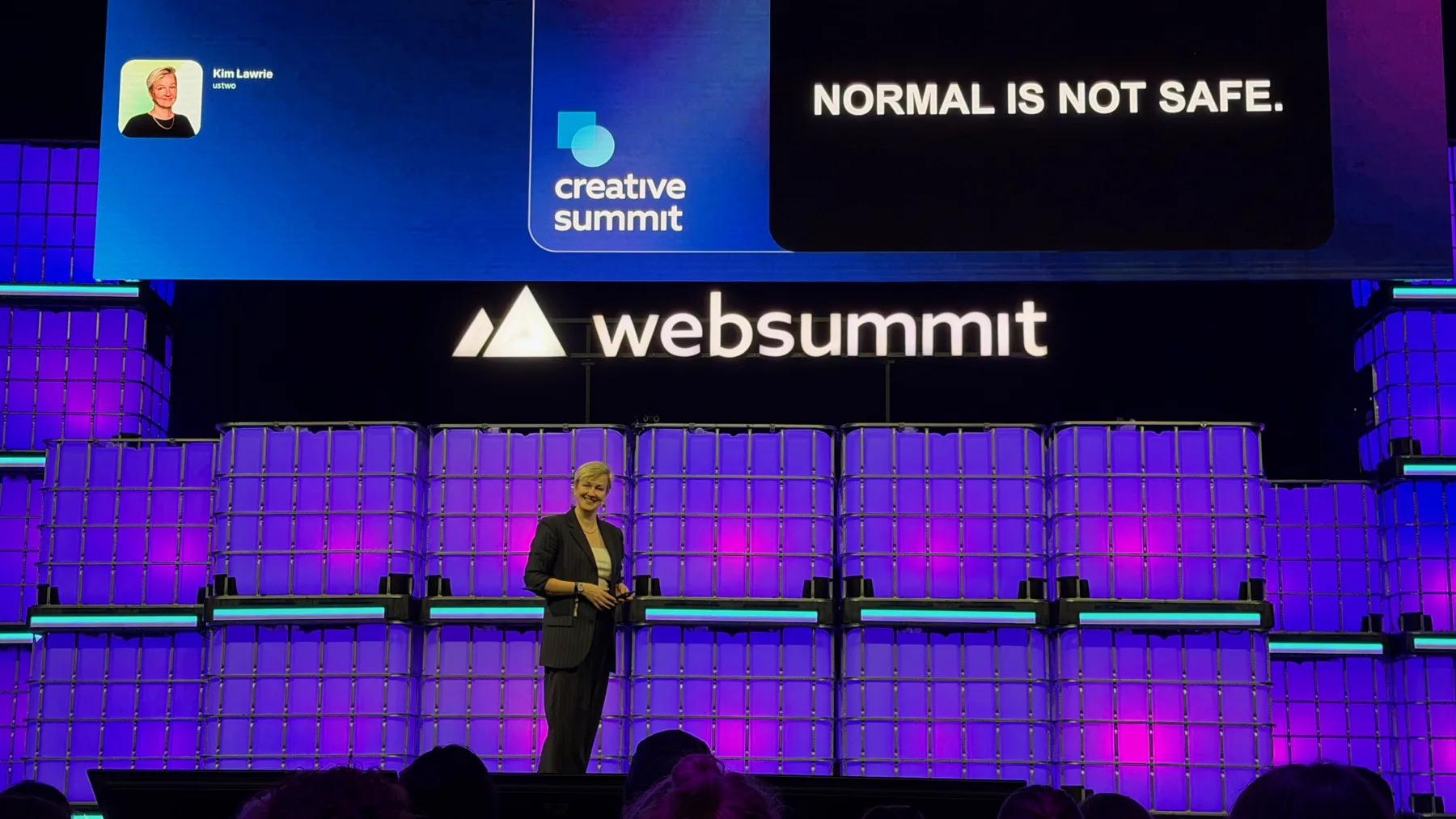
Why an AI stage talked about people who think differently
Emails, presentations and video ads now pass through the same handful of AI models. The result is predictable: everything starts to look alike. Against that backdrop, the price of thinking changes. The ordinary gets cheaper, the different gets more valuable.
That is why Web Summit, where almost every stage talked about AI, gave a separate session to people who think differently. They are also called neurodivergent: people with ADHD, autism, dyslexia. Business needs their skills, and Kim Lawrie made that case, on the same stage for the second year running.
Across my years as a manager I have noticed that every person on a team needs their own approach to open up. Some walk into a meeting ready to answer on the spot. Others need silence and time to offer their own version.
Demand for human creativity is growing
According to Canva’s 2026 report on marketing and AI, 97% of marketing leaders use AI every day. Yet 78% of consumers want to see advertising made by people, even if AI would do it better, and 87% believe the best advertising needs a human touch.
Other studies point the same way. According to Clutch (June 2026), 55% of US consumers think less of a company when its visuals are labeled as AI-generated. The World Economic Forum’s Future of Jobs report lists creative thinking among the skills in growing demand through 2030.
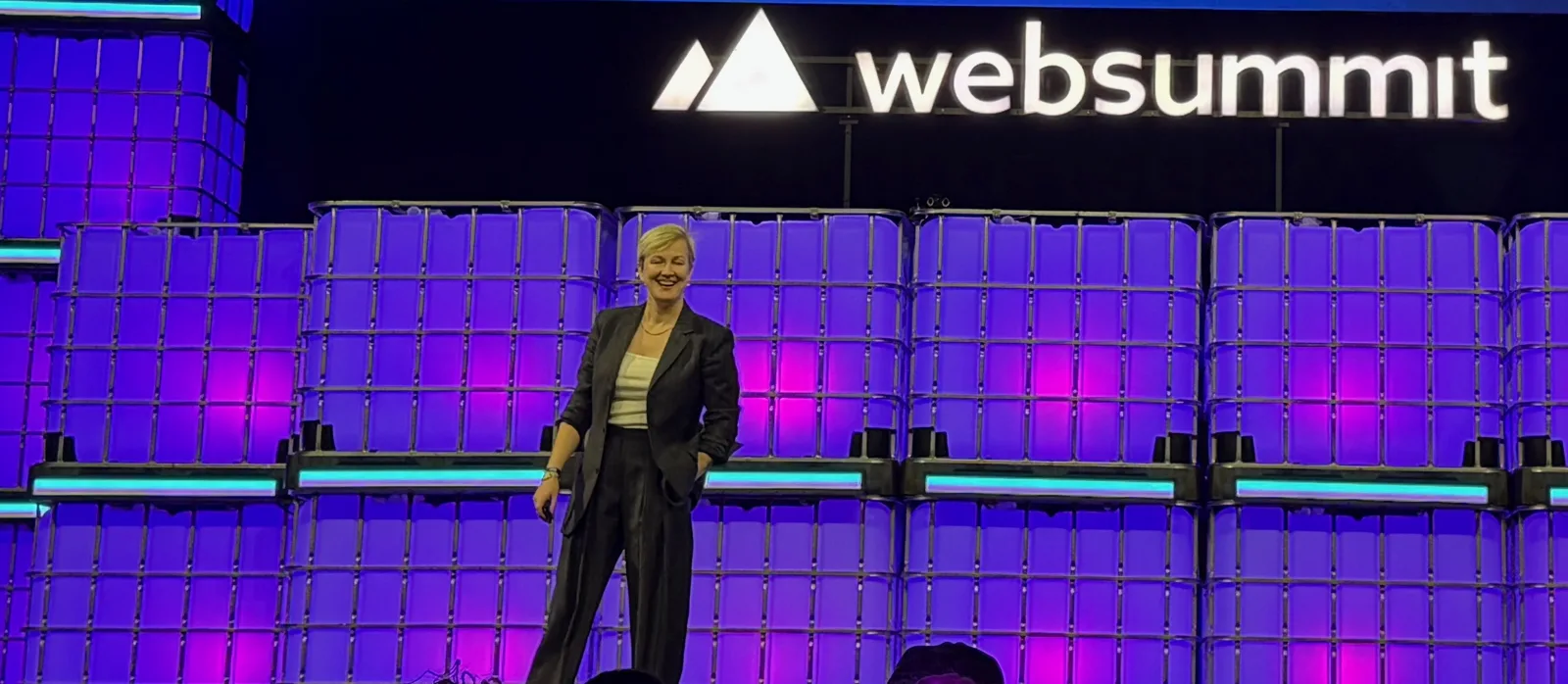
Kim’s talk is backed by Cannes Lions and 20 years in advertising
Kim Lawrie is Head of Tech at ustwo. Before that she spent 20 years in advertising: she started as a creative director, then led creative and emerging technology at the London agency House 337, and later AI and innovation at the agency group The Beyond Collective. Her clients included Santander, Sky, the Royal Air Force and Red Bull.
The best-known campaign she worked on is Long Live the Prince. In 2006 the football prodigy Kiyan Prince was stabbed to death while protecting a friend. The campaign used AI to show the man he would have become and added him to the video game FIFA 21 as a QPR player. In 2022 it won the Titanium Grand Prix at Cannes Lions. Cannes Lions is the world’s leading advertising festival, and Titanium goes to breakthrough ideas.
The human story behind this résumé: by 2023 Kim had spent 33 of her 36 years hiding that she is autistic. She spoke about it that year at D&AD, the British awards and festival for design and advertising. It was the first talk in D&AD’s history devoted entirely to neurodiversity. A year ago Kim walked onto the Web Summit stage and said openly that she is autistic and has ADHD. This year she was invited back.
My impression: a joke that turned out to be a confession
Kim’s strongest moment happened between the slides. She joked that she is still guessing how much eye contact people expect. The room laughed. A few minutes later she said in earnest that she knows exactly how much eye contact to make, how to stand and when to hold a pause, because she has practiced it every day of her adult life to look “like everyone else”. I watched masking happen live, and the talk became its own proof.
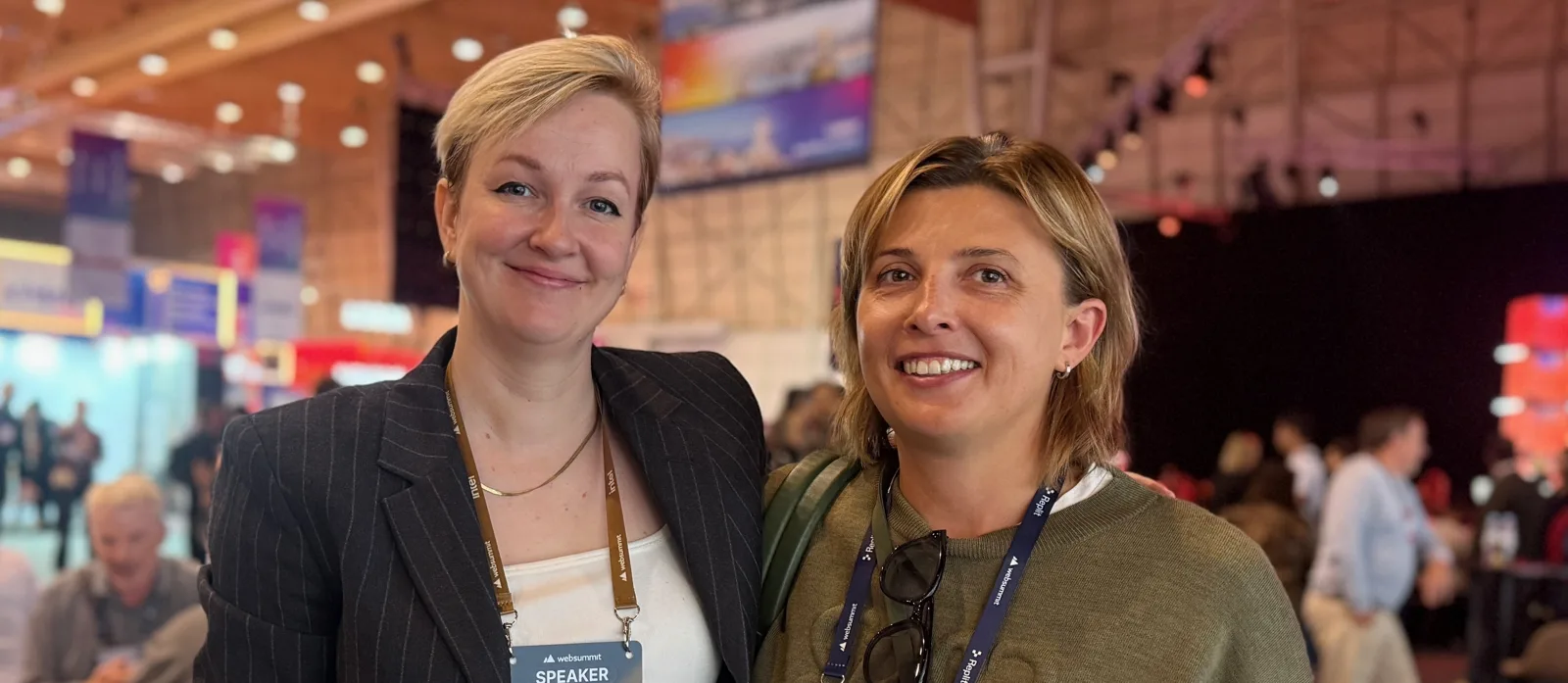
What kind of company ustwo is
ustwo is a London studio that has designed digital products for major brands since 2004: Google, Ford, DeepMind, Nike, BMW, Samsung. Its best-known product of its own is the puzzle game Monument Valley. A team of eight built it in 55 weeks for $852,000. In 2014 Apple named it iPad Game of the Year, and it won an Apple Design Award, Apple’s annual prize for the best app design. By 2018 its worldwide revenue had passed $25 million. In 2025, according to the company itself, booked revenue at ustwo’s New York studio grew by more than 400% year on year.
I love that a studio building services for banks and corporations once put eight people together, made a game and took Apple’s top award. That is different thinking in action. And 400% growth in a year confirms a simple thing for me: the more AI there is around us, the higher the demand for creative work made by people. I see it in my own work too: AI quickly gives many options, and business pays more and more for the one that stands out.
Those who think differently have the skills needed by 2030
According to the World Economic Forum’s Future of Jobs report (January 2025, a survey of more than 1,000 employers across 55 economies), almost 40% of the skills professionals need today will change by 2030. For 63% of employers, the skills gap is the main barrier to business transformation.
EY’s 2025 study shows where to look for those skills. On average, 36% of neurodivergent professionals have specialist or expert-level proficiency in the skills the Forum expects to grow fastest by 2030. Creative thinking is among them: 31%.
Companies find this talent by watching people work
These people used to be screened out at the interview: a standard interview rewards confident speech, quick answers and eye contact. A person could know the job brilliantly and still lose on presentation. So large companies built separate hiring programs where a candidate shows their skills in practice.
SAP launched Autism at Work in May 2013 with the goal of bringing employees with autism to 1% of its workforce, about 650 people. Instead of standard interviews, the company ran hands-on Lego sessions: candidates worked in groups of eight with Lego Mindstorms kits. The task: build one robot, then a second, and if time allowed, surprise everyone with something of their own. Almost three years into the program, 96% of the new hires had passed their performance reviews, and almost all of them stayed with the company.
I think I now understand better why I love Lego so much :) As a marketer I have long been a fan of the brand: Lego built a business on everyone assembling something of their own from the same bricks. And it turned out to be the best way to see how a person thinks.
Similar programs run at Microsoft (since 2015, several days of hands-on work before the interview), JPMorgan Chase (employees hired through the program into some technical roles were 90–140% more productive than colleagues with 5–10 years of experience), Goldman Sachs (a paid internship of 8–9 weeks), Wells Fargo (396 people hired full-time through the program, 82% year-over-year retention) and Palantir (a dedicated program since late 2025).
Before: the interview
- confident speech
- quick answers
- eye contact
Now at SAP: build a robot
- a group of 8 people
- a Lego Mindstorms kit
- you see how a person thinks in action
Why companies lose them after hiring
Then the person enters the everyday life of a team. In a meeting, people listen to whoever answers first. In the annual review that decides bonuses and promotions, points go to speaking up in meetings and to confidence. So people mask: they spend their energy on looking “like everyone else”. Kim cited a study: on video, on audio and in photographs neurodivergent people are judged less favorably, and in text the gap disappears. The person and the ideas are the same; only the delivery counts against them.
The cost shows in EY’s figures: only 25% of neurodivergent employees feel included at work, 39% plan to leave within a year, and for 74% of those the main reason is everyday interaction with colleagues. From the outside these people look fine, so a manager often learns about the problem from a resignation letter.
The way out Kim offers: audit the team’s rules rather than adjust the people. Take one process: an interview, a performance review, a meeting or a promotion. And ask three questions. What are we measuring that the job doesn’t actually need: speed of response, eye contact, a confident voice? Do we say what we actually mean, or does the person have to guess? What do people have to hide in order to be seen as competent? Everything you find, Kim calls the normality tax. Business pays it in lost ideas and in strong people leaving, and this tax can be cut.
How I apply it
What resonated
The more we talk about AI, the more humanity is valued. Kim added the economics: models do ordinary work fast and all alike, so thinking that differs is what’s in demand. For marketing this is a direct challenge. When the same models make the creative, brands start to sound the same.
What I do
In brainstorms I give time at the start, so that everyone first thinks and writes their ideas down on paper. To be honest, it is not because I am such an attentive manager. I know this from my own experience: when I come to a brainstorm, I don’t charge in like the cavalry. I need time for silence and focus. And group brainstorms as a format I like less and less, and use more and more rarely.
My next step is to check how I define a strong player on my team. By contribution to ideas and results, or by how they come across in meetings and how socially active they are?
What this means for a CMO
A brand’s voice rests on people who see differently, and on processes where they are heard.
When a team assembles copy, visuals and ideas through the same AI models, the brand gradually blends in with its competitors. The difference comes from people with another point of view. But their ideas get lost where the fastest and loudest voice wins.
A practical step for this week: look at how ideas are born in your team. Briefs, brainstorms, creative reviews. Is there time to think in silence, and a written round before the discussion? How many ideas reach you on paper, and how many only out loud?
Next steps: when hiring creatives and analysts, replace part of the interview with a short assignment on a real task, as SAP did with Lego. And in team reviews, check what you praise and promote for: contribution to ideas and results, or being active in meetings.
Transcript of Kim Lawrie’s talk, Web Summit, Stage 3, 12.11.2026
Canva, State of Marketing and AI Report 2026, as reported by The Next Web: thenextweb.com
Clutch, survey of 23.06.2026: clutch.co · www.destinationcrm.com
World Economic Forum, The Future of Jobs Report 2025, 07.01.2025: www.weforum.org
EY Global Neuroinclusion at Work Study 2025: www.ey.com
LBB, 28.10.2024 (Kim’s career, Cannes, Women in IT): lbbonline.com
LBB, D&AD 2023 (33 of her 36 years, the first talk on neurodiversity): lbbonline.com
Long Live the Prince: Campaign, 2022 · The Stable · Muse by Clio: campaignlive.com · www.thestable.com.au · musebyclios.com
ustwo: Business Insider 14.12.2017; MacRumors 15.01.2015; TouchArcade; Sensor Tower 2018; ustwo press release on 2025 (Healthtech Digital)
SAP Autism at Work: CIO; Inc; SAP blog 2016: www.cio.com · www.inc.com
Microsoft, JPMorgan, Palantir: Mentra 2026, Forbes 26.03.2026: www.forbes.com
Goldman Sachs: www.goldmansachs.com
Wells Fargo, 26.10.2026: stories.wf.com