If AI makes people faster, why isn’t the company faster?
Tao Zhang’s answer. He is co-founder and Chief Product Officer of Manus, the company behind a general-purpose AI agent. He spoke at Web Summit 2026 twice. On 9 November he was the first human guest on the main stage on opening night. On 10 November, at AI Summit, the AI stage inside Web Summit, he showed how the company rebuilt its work around its own agents. I was in the audience at AI Summit.
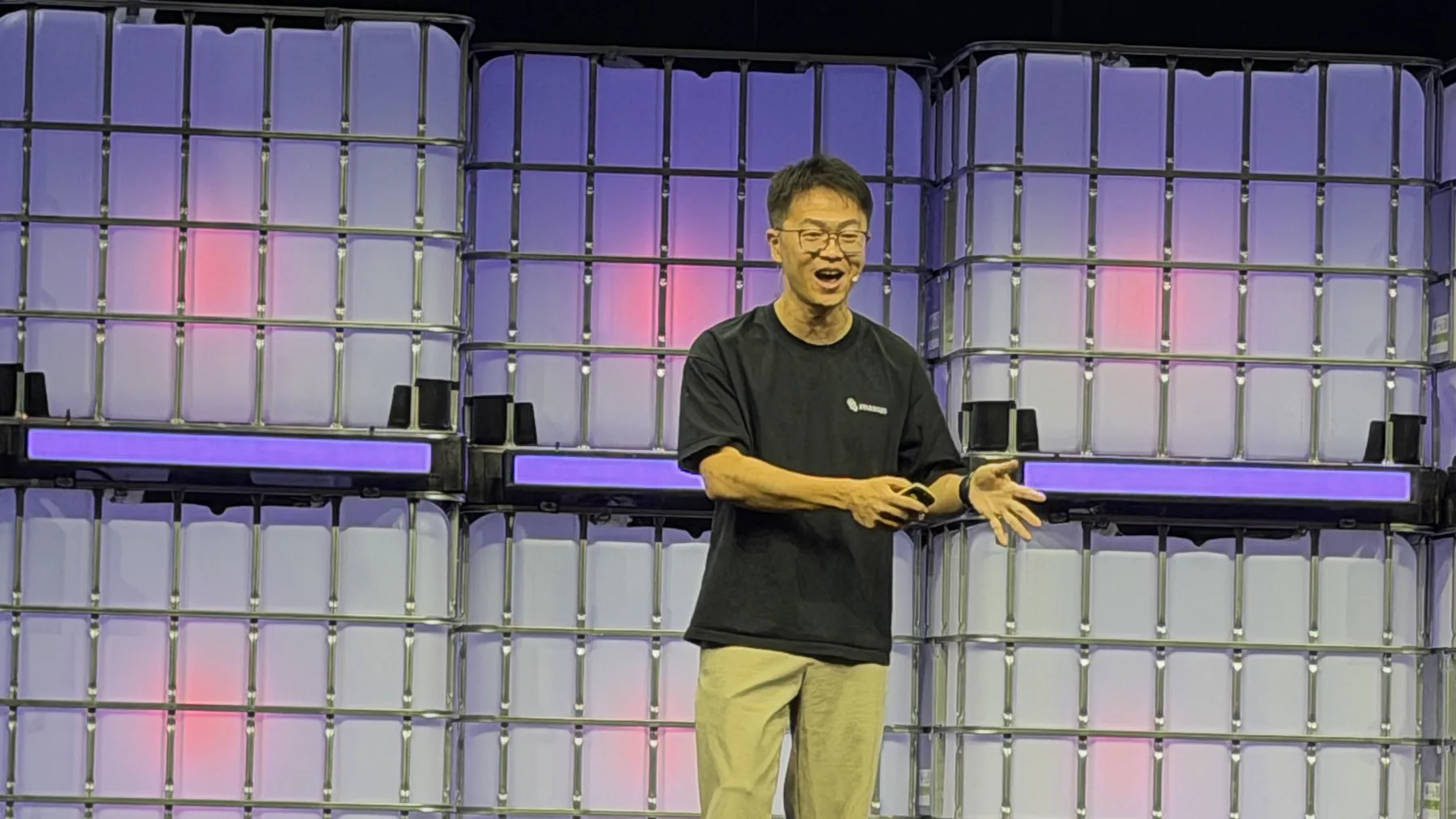
AI sped up the tasks, and decisions still wait for a person
One Manus engineer runs 10 to 20 AI agent tasks at once. Yet the company works as a chain: one person, one step, one handoff. Tao put it on a slide in one line: AI got faster, and our way of working stayed the same.
One weekend an agent worked through tasks from team chats on its own. On Monday an engineer found more than 200 decisions waiting, and only he could make them.
Many companies look the same. The US National Bureau of Economic Research (NBER) surveyed almost 6,000 executives in the US, the UK, Germany and Australia: 89% of companies saw no change in productivity from AI over the past three years (February version of the study).
Takeaway: AI was built into the old chain, and people became the bottleneck.
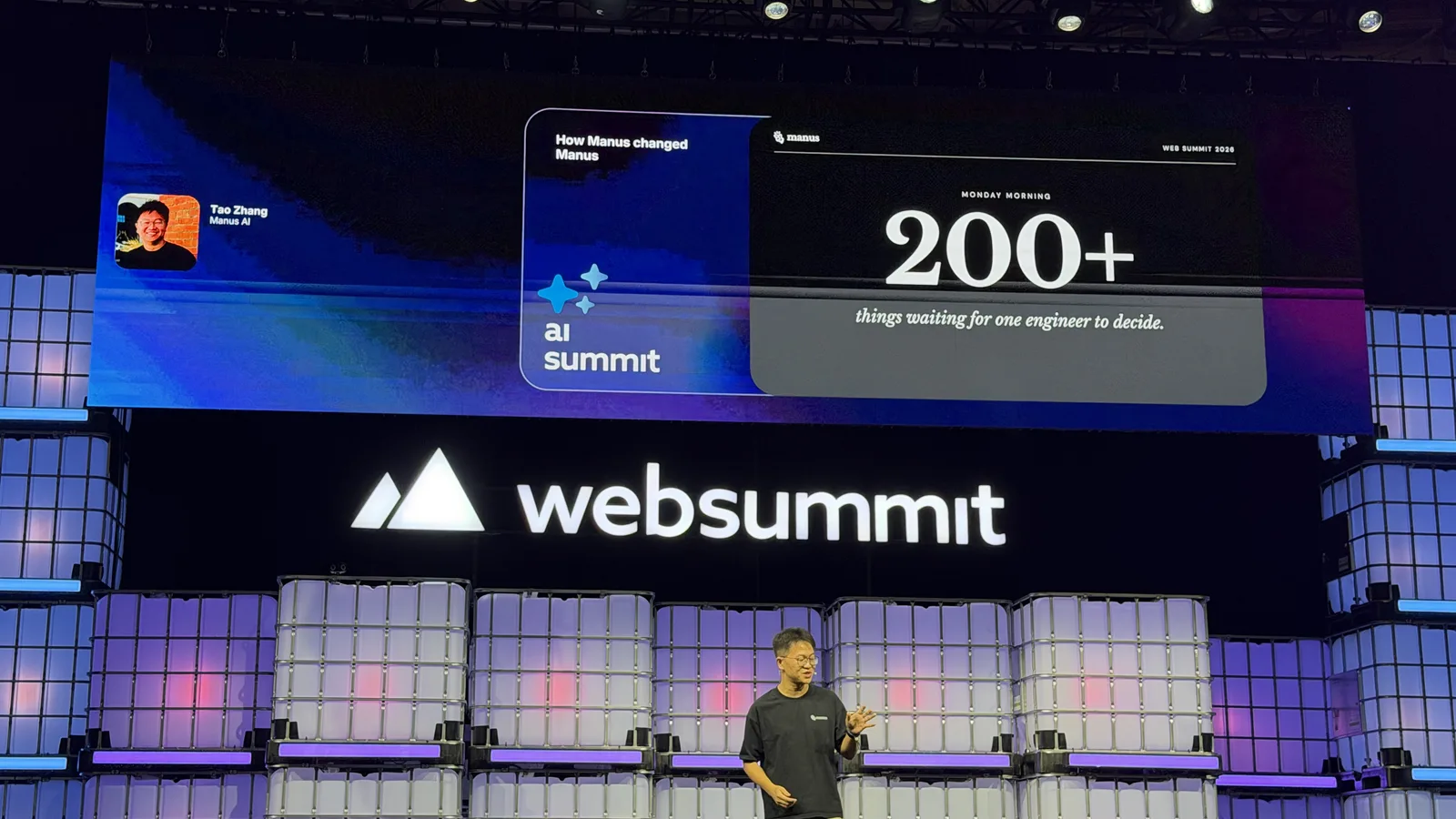
Manus proved its agents work by using them in its own work
Manus builds a general-purpose AI agent: a person sets a task, and the agent carries it out on its own virtual computer. The company launched the product in March 2025 and reached $100M in annual recurring revenue 8 months later, according to the company.
In December 2025 Meta, the owner of Facebook and Instagram, bought Manus. The parties kept the price private; media reported about $2 billion. On 27 April 2026 the Chinese regulator ordered Meta to unwind the deal, and on 1 September Manus announced it was operating as an independent company again. In October 2026 it raised more than $500M in its first round since leaving the deal.
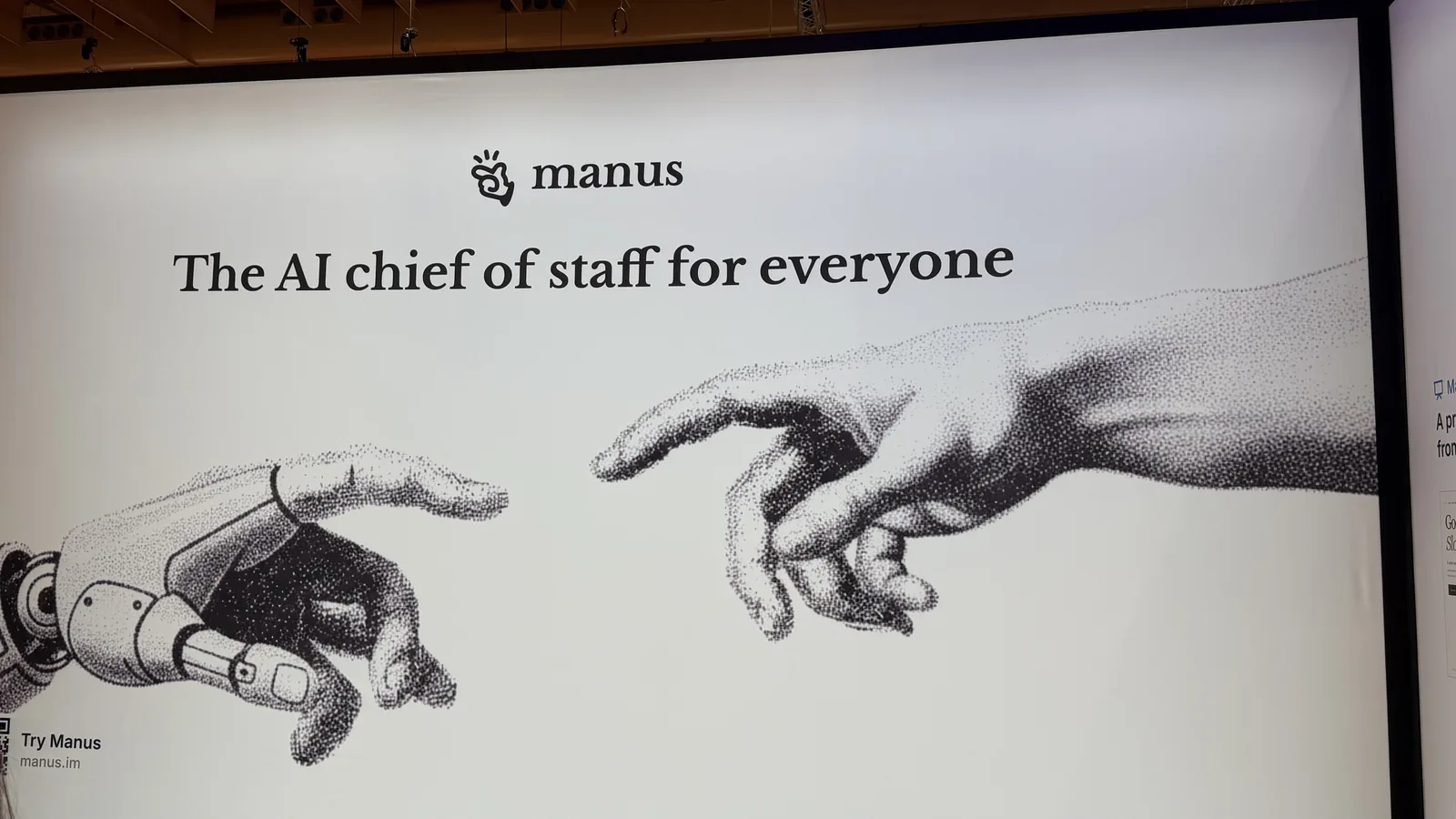
At the Manus booth in the Web Summit exhibition the main line read: “The AI chief of staff for everyone”. This is exactly how Tao uses his agent: as a personal project office.
Takeaway: Manus grew to $100M in 8 months on its own product: the team sets tasks for its own agents every day.
At Manus a candidate interviews alongside AI
On opening night Tao put his main point this way: AI is already good at doing things, so companies need people who are good at working with AI. Hence a new hiring format. According to Tao, since March 2026 Manus has replaced the coding test with a four-hour assignment the candidate solves together with the Manus agent.
Before
- a classic coding test
- the candidate solves the task alone
Now
- a four-hour assignment
- the candidate solves it with the Manus agent
Takeaway: hiring tests what the job needs every day: the ability to direct AI.
Tao handed his morning routine to an agent
Tao Zhang is one of the founders of Manus and leads product. He opened the Web Summit opening night as the first human guest on the main stage, right after humanoid robots from the Chinese company AgiBot danced there.
On stage he called himself a typical ADHD person (attention deficit hyperactivity disorder): every morning he has 20+ to-dos, and getting started is the hardest part. Now a Manus agent takes the list: it splits it into tasks, gathers the context and hands each task to the right person on the team. It works like his personal project office.
My impression
A sincere manner. Very well prepared, he keeps his timing to the minute, and still tells the story of his company with emotion. This matters so much in a world of cold technology :)
Takeaway: the more a speaker talks about AI, the more humanity they need.
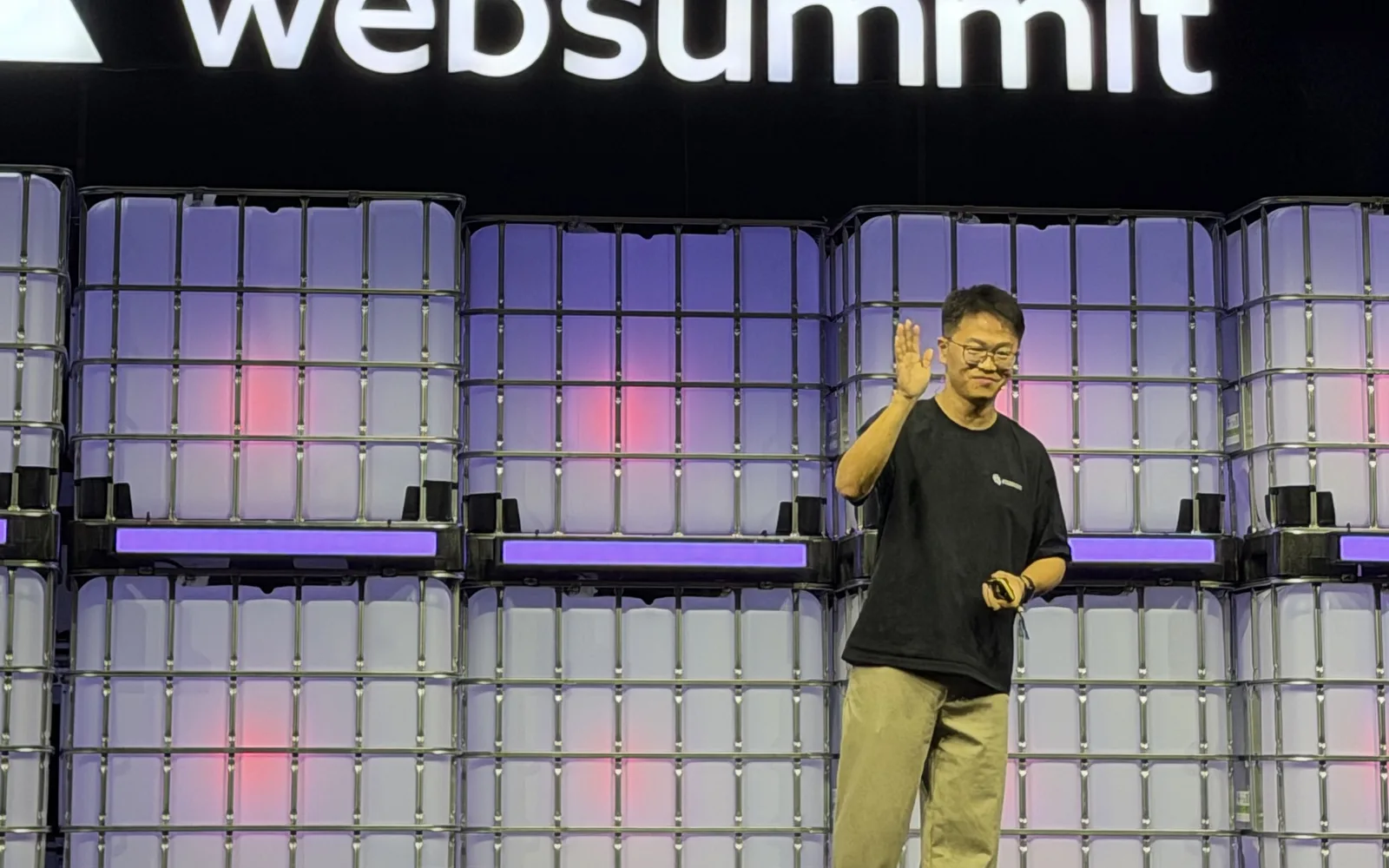
Speed came when the team changed its processes
The first result of AI was a set of new problems, Tao admitted, rather than efficiency. The company answered with three changes.
1. AI got everything a new hire gets
A new hire gets a desk, a laptop and access, while AI usually gets a single line of prompt. At Manus the agent gets the code, the tools and a way to test its own work, and takes the task to the end.
2. One person owns one task
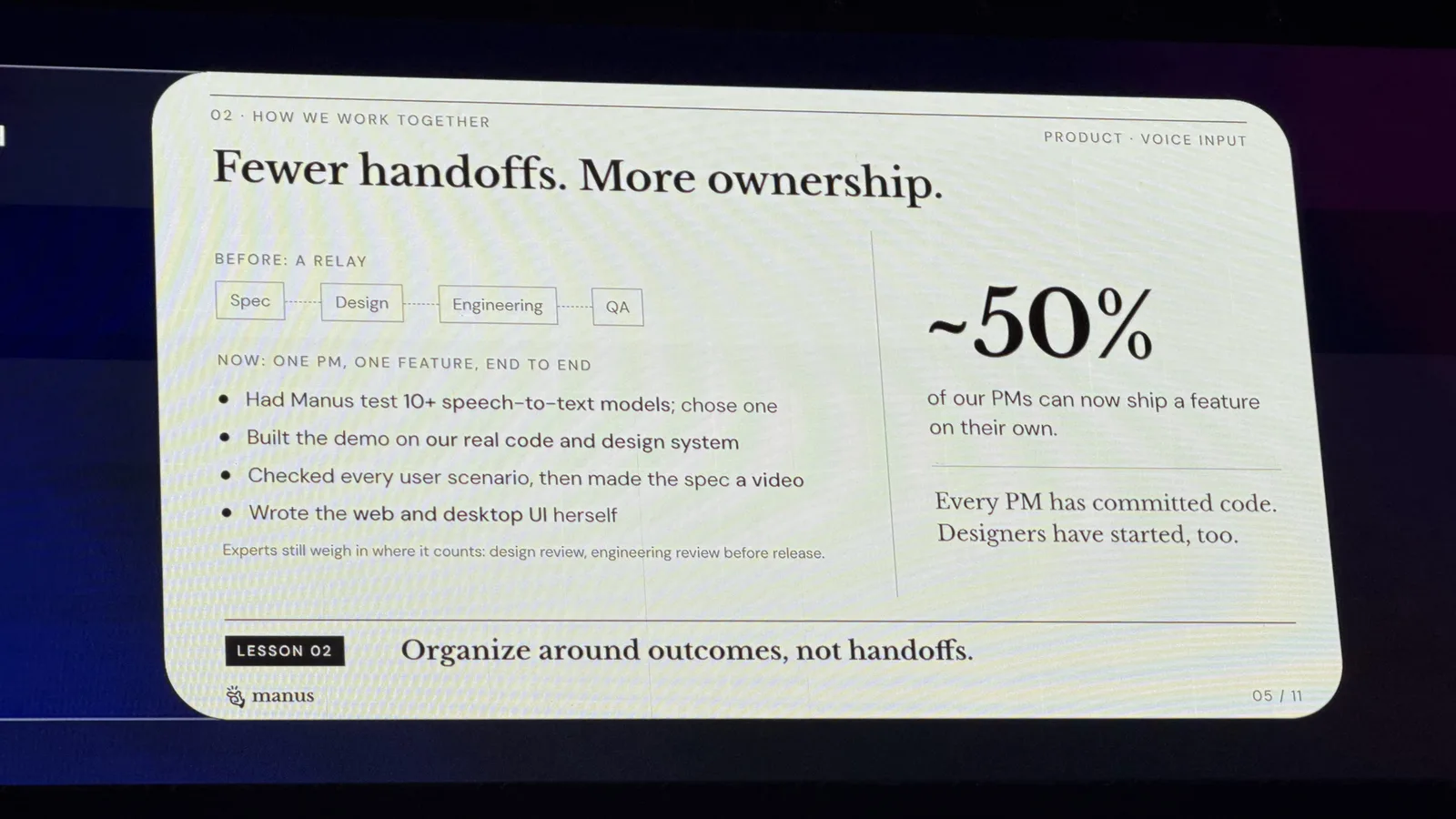
It used to be a relay: product, design, engineering, testing. Now one person owns the path from idea to release, and experts review the work before it ships.
3. People decide only what matters
AI completes simple tasks itself and prepares complex ones for a person’s decision. Direction and big bets stay with people. Speeding up the queue is pointless: a faster queue is still a queue. What has to change is what goes into it.
Takeaway: for AI to speed up the company, first change how the work is organized, then the tools.
Product managers now ship features themselves, past the engineering queue
About 50% of Manus product managers ship new product capabilities themselves. Every PM on the team has committed code, and designers have started too. One of the PMs summed up the shift: she used to be in the loop, and now she is on the loop. A person sets the direction and checks the result, and the agent goes through the steps inside the loop.
One of Tao’s lines: hands on only when it matters.
Takeaway: people’s attention became the company’s scarcest resource, and it is spent where a person is truly needed.
How I apply it
I am building the next version of our operating model: AI-ready.
01 · Agents on the team
I want to understand in detail who uses agents and for which tasks. I scale the best practices across all of marketing.
02 · Processes as products
These used to be separate functions; now every process becomes a complete marketing product.
03 · Technical tasks in a loop
Simple ones run in a loop. The team focuses on development and on designing how the work runs.
What it means for a CMO
Marketing gets its speed from AI through a new team design; the tools come next.
If content, campaigns and analytics still move as a relay from brief to sign-off, agents simply fill the queue of decisions for the head of marketing faster.
A practical step for this week: take one process, for example a campaign launch, and count how many times the task changes hands. Test every handoff with one question: can one person own this step together with an agent, with an expert joining only for review?
Session “How Manus changed Manus”, AI Summit, stage 13, 10 Nov 2026: Granola transcript and the author’s photos of the slides
Opening night, main stage, 9 Nov 2026: Startups, 10 Nov 2026 · Euronews, 9 Nov 2026
$100M ARR: Manus blog · the Meta deal: Washington Times, 30 Dec 2025 · Trending Topics, 30 Dec 2025
The deal unwound: O’Melveny · The Standard / Reuters, 12 Aug 2026 · independent since 1 September: Manus blog, 1 Sep 2026 · Caixin, 2 Sep 2026
$500M+ round: TechCrunch, 8 Oct 2026 · VKTR
NBER, 89% of companies saw no change in productivity: NBER w34836 “Firm Data on AI” · The Register, 18 Feb 2026 · ITPro, 20 Feb 2026