The CMO becomes an architect
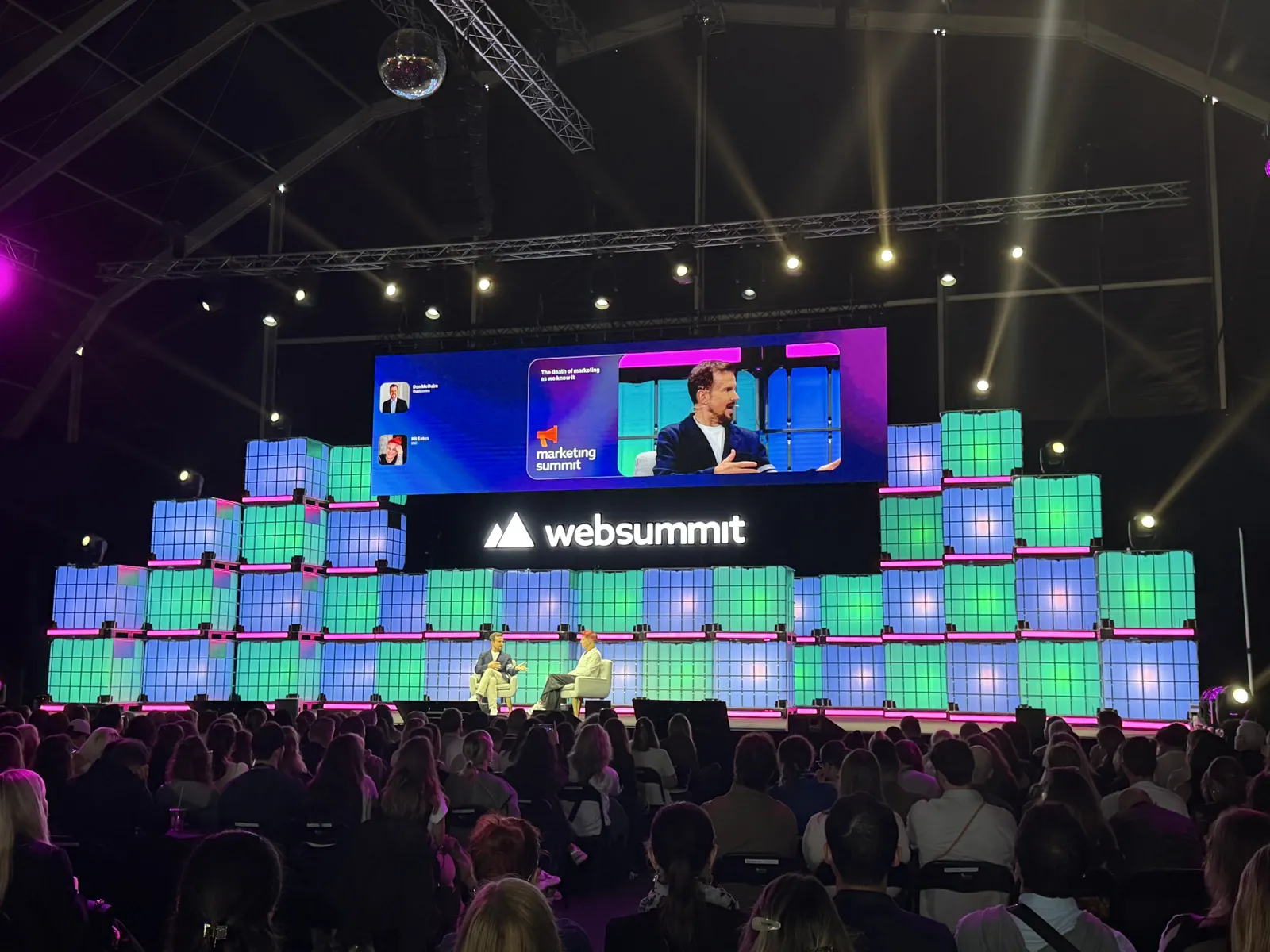
Don McGuire, CMO of Qualcomm, on rebuilding marketing for a person and their AI agent. Session “The death of marketing as we know it” at Marketing Summit, 10 November 2026, moderated by Kit Eaton (Inc.).
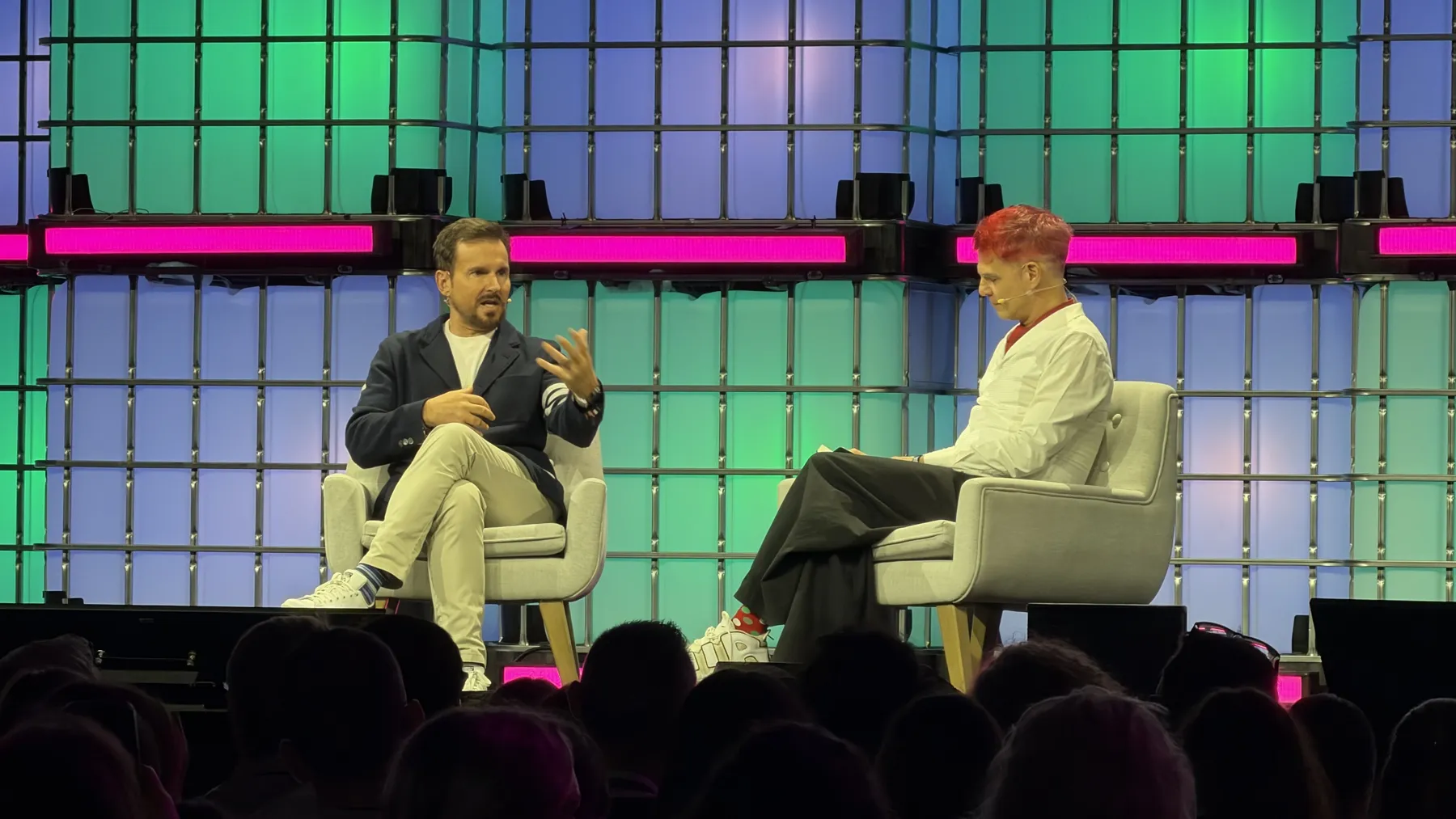
The buyer now has an AI agent
Every buyer now works alongside an AI agent. It compares options, reads reviews and proposes a choice before the person ever opens a brand’s website. On stage we saw a Mastercard demo: the agent picked an ASUS laptop on its own, gathered the reviews and suggested a card to pay with.
McGuire put it on a single slide, “Parameters of trust”: people and agents trust for different reasons.
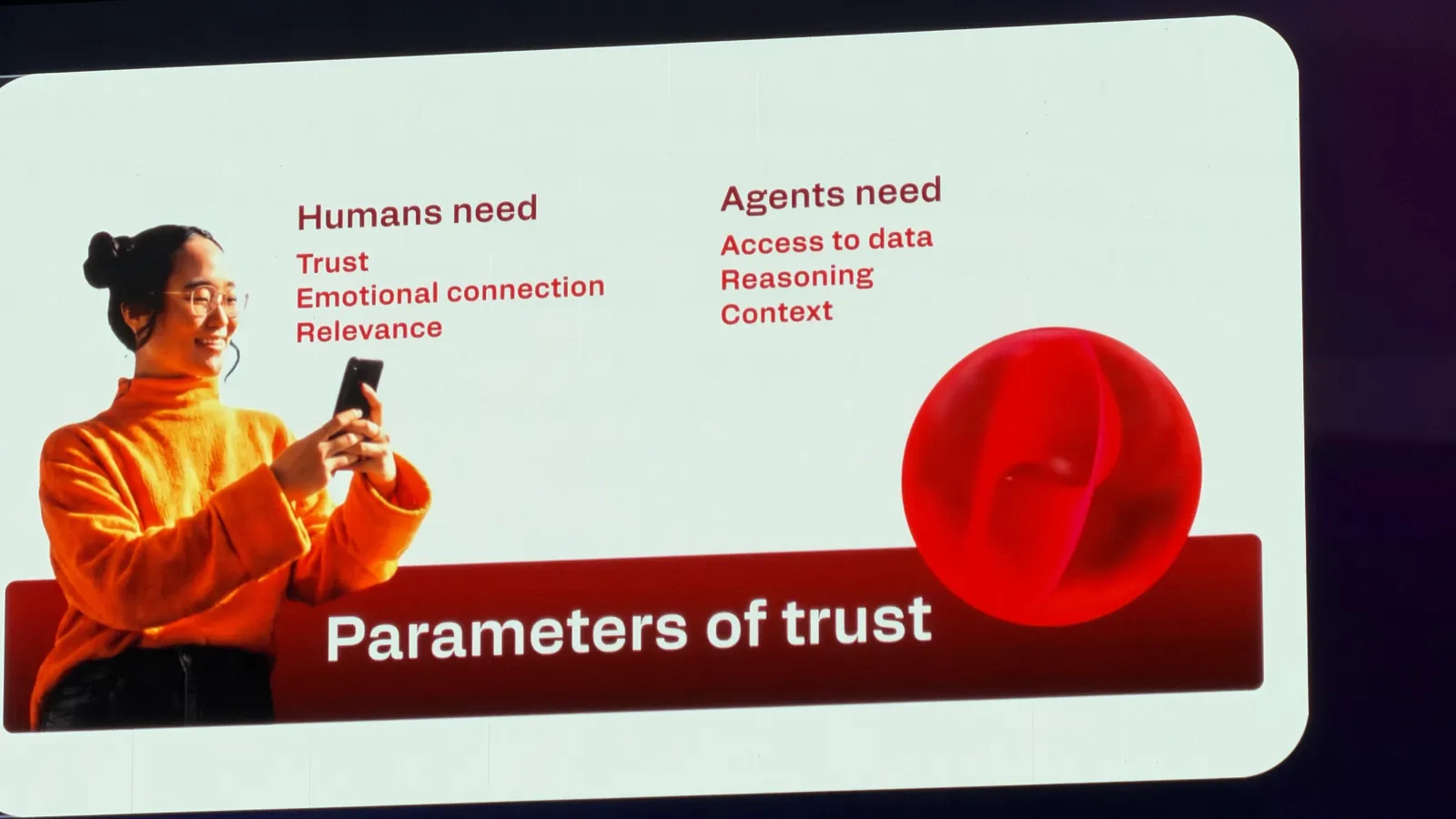
Humans need
- trust
- emotional connection
- relevance
AI agents need
- access to data
- reasoning
- context
For the first time, communication is built for two audiences at once, and every company writes its own rules of the game. The key question for a brand now reads: how does the agent that chooses on a person’s behalf see you?
Takeaway: a brand has to make sense both to a person and to their AI agent.
Qualcomm in numbers
Qualcomm designs Snapdragon processors. In fiscal 2026, which ended on 27 September, the company’s revenue reached $43.1 billion. In the third quarter of 2026 Qualcomm accounted for 22% of global smartphone chip shipments: second place after MediaTek with 28%.
Snapdragon powers Samsung, Xiaomi and OnePlus smartphones, and Microsoft, Dell and Lenovo laptops. A Qualcomm chip sits in roughly one in five smartphones worldwide, yet the buyer sees Samsung or Xiaomi on the box.
That is why Qualcomm builds its consumer brand itself. Snapdragon Insiders, a club where tech enthusiasts try new devices first and meet in person, has more than 20 million members. It gives the company live feedback from people who buy smartphones and laptops. As agents prepare more and more of the choice, community and media mentions become a signal they read.
Takeaway: Qualcomm sells chips to manufacturers and builds brand love directly with people. B2B2C in its purest form.
Who is the speaker
Don McGuire joined Qualcomm in 2016 to lead global product marketing. Today he is Executive Vice President and CMO. Before Qualcomm he led PC and tablet marketing at Intel.
He has 25 years in the mobile industry: he started in sales and marketing at the carrier McCaw Cellular, then worked for handset makers and chip designers. Forbes lists him among the world’s most influential CMOs. And a detail from the stage: McGuire’s mother is 89 and uses ChatGPT.
Takeaway: he has worked for mobile carriers, handset makers and chip designers. That experience gives him a complete view of the market, which is why he carries trust and authority in tech marketing.
Qualcomm’s layer cake
In January 2026 McGuire took Qualcomm’s marketing apart and rebuilt it in layers. He calls the CMO’s role in this model “the architect”.
The foundation everything runs on.
New workflows built with AI.
The team built around the processes.
The rebuild took about 7 months and was hard: people resist change. Now, McGuire says, the team is starting to see the return. Companies that rushed to cut staff for AI, in his words, are already hiring people back: token costs turned out higher than expected.
Qualcomm’s principle is short: human led, AI powered.
Takeaway: systems come first, then processes, and the people are brought together around them.
So where are the savings?
Riding the promise that AI would lift productivity by 37%, finance asked marketing for 10% in AI savings as early as 2026. McGuire declined to commit to a number while the data is thin: experiments first, then a report on the real effect. The savings he finds go back into the business.
Publicly, Qualcomm points to a different effect: pace. As early as 2023 McGuire said generative AI helped the team write copy and name products faster. In 2025 the company brought in Adobe GenStudio, an AI content production service, to turn around the thousands of assets it needs every week.
Takeaway: the first return on AI in marketing comes as pace and volume; savings are counted later, from the facts.
How I apply it
The work started with me. I built this review for two readers: a person and an AI.
McGuire’s approach is in tune with my own position and makes it stronger: I measure the effects of marketing by the facts. Pace and volume first, economics after.
My team has its marketing system mapped out, and processes sit at different levels of maturity. So in some areas the result already shows in money, and in others, for now, in speed.
If you want to start with yourself, split your marketing into three layers: systems, workflows and the people who run them. Then mark the areas AI can already handle end to end. Fifteen minutes of work, and you have a map of your marketing transformation.
Session “The death of marketing as we know it”, Web Summit 2026, Marketing Summit, 10.11.2026 (transcript and author’s photos). Qualcomm, Fourth Quarter and Fiscal 2026 Results, 04.11.2026. Counterpoint Research, Global Smartphone SoC Shipments, Q3 2026. Qualcomm, “Happy 5th Birthday, Snapdragon Insiders”, 27.02.2026. Qualcomm, Leadership: Don McGuire. Snapdragon devices: Gizmochina, 20.03.2026, HotHardware. Qualcomm OnQ (2023) and Adobe Newsroom (09.2025) on how Qualcomm’s marketing works with generative AI.